

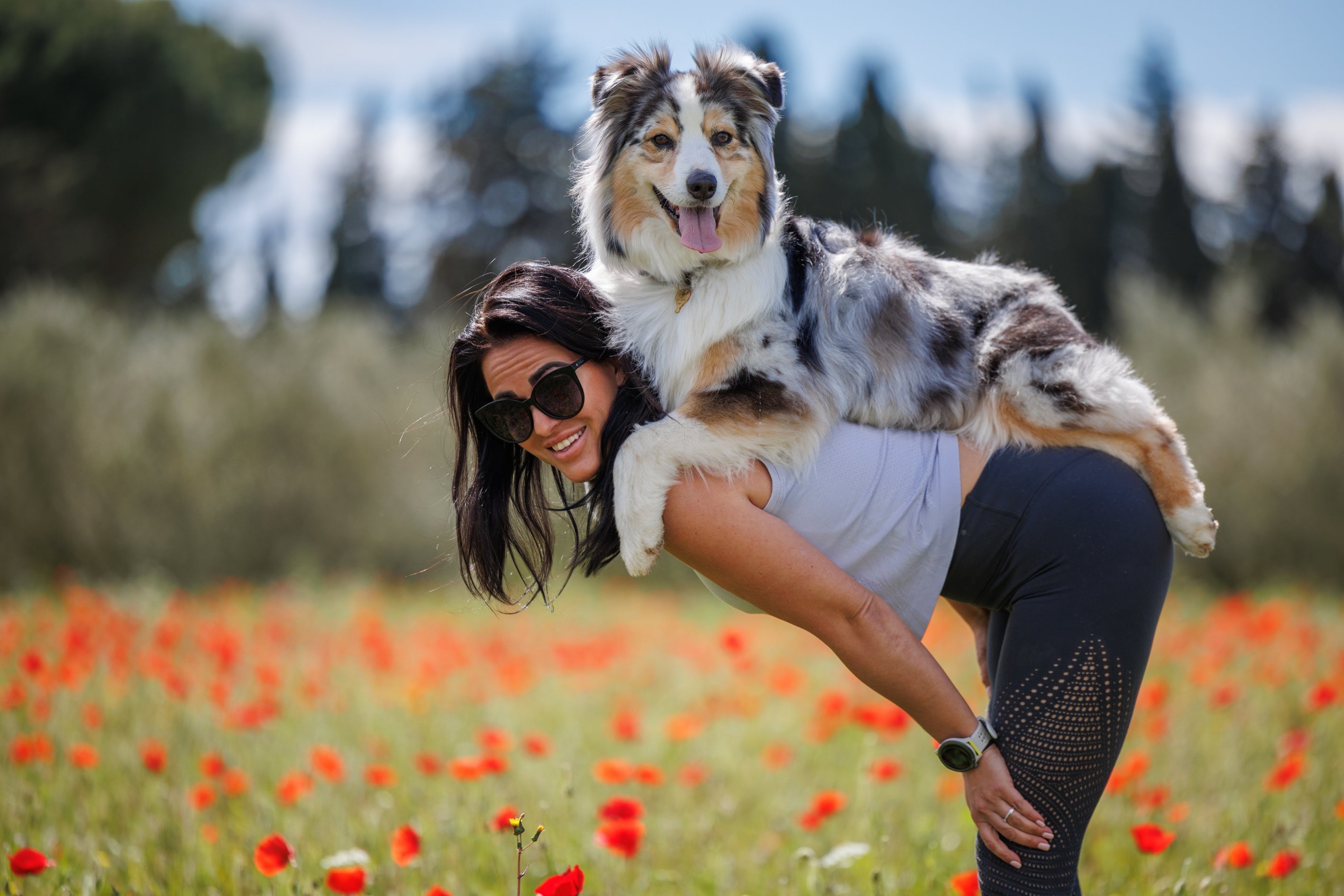
For a long time, the idea of canine well-being was tied to a kind of permanent spending of energy. A happy dog had to run, play, let off steam, be stimulated without let-up. The ideal day ended with an exhausted animal sleeping deeply after several hours of activity. That view is still deeply rooted in how we relate to dogs. Yet many animal behaviour professionals, vets and trainers now observe another reality: many modern dogs no longer really know how to relax.

Between urban rhythms, constant demands, repeated activities, permanent social interaction and sometimes even their humans' anxiety, some dogs live in a state of near-continuous vigilance. They are active, yes, but rarely truly settled. It is precisely in this context that a gentle discipline, still little known in France but growing fast, is drawing attention: Doga.
A contraction of “dog” and “yoga”, Doga draws directly on traditional yoga while bringing the dog into the practice. But contrary to the sometimes caricatured image passed around on social media, Doga is nothing like a performance or a series of absurd postures imposed on the animal. Its aim is far deeper: to slow down together, to reconnect through gentle movement, breathing and touch, and to create a genuine shared space of relaxation.
Doga does not seek to turn the dog into a yogi. It seeks to reinvent the human–dog relationship around calm. To explore this practice of yoga with your dog in more detail, you can visit yoga-dog.fr a platform dedicated to Doga, to canine well-being and to activities that foster the connection between a human and their animal.
Doga, an answer to the over-stimulation of modern dogs
Today many owners still believe that stimulating a dog constantly is the key to his balance. Days follow one another with very active walks, intensive fetch games, sporting activities or constant interaction. Yet an excess of stimulation can sometimes produce the opposite of the intended effect.
An over-excited dog is not necessarily a fulfilled dog. Some even develop a form of addiction to activity, with difficulty handling frustration, rest or boredom. They become unable to come back down emotionally.
Doga offers a radically different approach.
Here the aim is not to excite the nervous system further but, on the contrary, to settle it. Sessions rest on slow movements, breathing exercises, gentle stretches and pauses in which human and dog learn together to slow down. The dog is never forced to take part. He can watch, lie down, come into contact, or simply share the calm energy of the moment. That freedom is essential. Doga is not a discipline of control. It is a practice of listening.
The neurophysiological effects of shared calm
If Doga appeals so much today, it is also because its effects are beginning to be better understood thanks to what we know about the nervous system and human–animal interaction. In humans as in dogs, chronic stress leads to excessive activation of the sympathetic nervous system — the one of alertness, vigilance and fast reaction. Conversely, states of deep calm activate the parasympathetic system, responsible for rest, recovery and emotional regulation.

Slow breathing plays a major role here. When the human consciously slows their breathing during a Doga session, the dog perceives these physiological changes. Dogs are extremely sensitive to our emotional state, our body posture and our variations in tension.
Touch also acts as a powerful emotional regulator. Studies of tactile interaction show that gentle, reassuring contact encourages the production of oxytocin, sometimes called the “attachment hormone”. This hormone takes part in lowering cortisol — the stress hormone — while reinforcing the sense of safety and the quality of the social bond.
In other words: when you genuinely take the time to slow down with your dog, the effects are physiological for both species. That is also why many Doga practitioners describe a very noticeable feeling of calm after sessions, in themselves as much as in their animal. An inclusive discipline, far from performance. Doga has another important quality: its accessibility. Unlike some physical or technical canine activities, this discipline requires neither particular fitness nor prior experience. The dog's age, breed, size or energy level do not matter. Nor do the human's age or suppleness.
Doga is above all a relational practice. Sessions can be adapted to puppies, senior dogs, sporting dogs or even anxious animals. Some exercises are done standing, others sitting or on the floor. In certain postures the human even uses the dog's presence to find their balance, turning the session into genuine “partner yoga”.
This idea of shared imbalance is central to Doga. We stop seeing the dog as a companion simply to be managed or stimulated. He becomes an emotional and physical partner with whom we learn to synchronise. And that is often where the relationship changes profoundly.
Canine massage: a tool for connection as much as for prevention
Touch holds an essential place in the practice of Doga. Sessions very often include moments of canine massage and gentle handling, which play a major role in physical and emotional relaxation.
For many dogs, being touched calmly, slowly and without constraint is a deeply reassuring experience. Massage helps release muscular tension, improves blood circulation and supports better recovery after exercise. But its effects go well beyond the physical.
Massaging your dog regularly also means getting to know his body better. Running your hands over the muscles, the legs, the ears or the back, you sometimes quickly notice a small soreness, an unusual tension, the beginning of irritation, a discreet injury or even a tick hidden under the coat.
This habit of regular handling can be genuinely useful as a precaution. It also accustoms the dog to accepting care, which can considerably reduce his stress during veterinary consultations or medical handling.
In this logic of relaxation and muscular recovery, certain natural care products can support sessions effectively.
The Massage Gel was designed precisely to support these moments of relaxation and recovery. Its natural formula combines several actives known for their soothing and circulatory properties.
Arnica is traditionally used to ease muscular tension and support comfort after exercise. Wintergreen is particularly valued for its relaxing effect on muscles under strain. Aloe vera and calendula complete the formula with their soothing and moisturising properties.
Used during a gentle massage after a hike, a sporting session or simply a moment of Doga at home, this gel helps turn care into a genuine ritual of shared well-being. Massage then becomes far more than a technical gesture: it becomes a relational language.
Paw pads, the forgotten part of canine comfort
In whole-picture approaches to canine well-being, the paw pads are often overlooked, even though they play a fundamental role in a dog's physical comfort.
They absorb shocks, stabilise the footing and take a daily battering: hot tarmac, snow, salt, abrasive ground, long hikes, urban surfaces or sporting activity.
In Doga, where dogs are invited to slow down, to settle and sometimes to hold certain positions for a few moments, comfortable footing becomes particularly important. Caring for the paws is therefore an integral part of this approach to well-being. The repairing balm (Repairing paw balm for dogs – ELEMENT VET ) was developed precisely to moisturise, protect and restore sensitive pads. Its natural formula combines several actives known for their restoring and soothing properties, notably calendula, zinc oxide and several essential oils with cleansing qualities.
Applied during a paw massage, this balm not only protects the pads against outside aggressions, but also creates a calm moment that many dogs greatly appreciate. These care rituals gradually reinforce trust and the quality of the human–animal bond. Many humans also discover that their dog spontaneously asks for these massage moments once they become regular.
Travelling with your dog differently
The rise of Doga also accompanies a broader shift in how people travel with their dogs. More and more people now look for shared experiences that go beyond a simple walk or “pet-friendly” holidays. Stays centred on canine well-being, nature and reconnection are drawing growing interest.
Doga trips (Doga Retreats) fit into this trend. They generally combine yoga with your dog, walks in open country, canine massage workshops, breathing, relaxation and moments of rest far from the everyday pace. These experiences often allow you to discover your dog differently. In a calmer, slower environment, many animals reveal different behaviour: more relaxation, more attention to the human, a better capacity to recover emotionally.
For those who wish to discover this approach gently, it is also possible to start at home with a free guide of Doga postures and exercises, allowing you to observe gradually the effects of calm, touch and breathing on your dog.
Because at bottom, Doga reminds us of something essential: canine well-being is not built on activity alone. It is also built on rest, emotional safety, trust and the ability simply to be together with no goal of performance. In a time when everything is speeding up, that idea perhaps resonates as much for humans as for their dogs.


