

In the world of animal well-being there is a reality that is sometimes hard to hear, but essential to recall: there is no miracle solution capable of instantly restoring an animal to perfect health when imbalances have been in place for a long time.
Yet we are often approached too late, and the requests tend to arrive at the same moment: when the animal is already suffering.
Chronic digestive upset, advanced joint discomfort, persistent tiredness,, entrenched anxiety, difficult recovery, recurring itching or marked ageing… Many owners then discover natural supplements, plants or supportive care in the hope of a rapid transformation.
That expectation is understandable, but above all it reveals how we still very often approach health: we act when the problem becomes visible, whereas all the groundwork should normally have begun well, well before.
Veterinary plant-based care does not work like a magic wand. It replaces neither a vet, nor a medical diagnosis, nor suitable treatment when that is needed. On the other hand, it can become a remarkable tool for prevention and long-term support when it forms part of a whole-picture approach to animal well-being. And at bottom, that logic is no different from the one we apply — or should apply — to our own health.
In humans, nobody in theory starts eating better only once they fall ill. Nobody waits for severe chronic pain to understand the importance of movement, sleep or emotional balance. We know today that good health is built day by day, through an accumulation of favourable habits. For animals, the principle is exactly the same.
Animal health is built in daily life, not in an emergency
A dog's or a cat's body works according to complex and fragile balances. Digestion, recovery, mobility, immunity, stress management and sleep quality are closely linked.
When an imbalance sets in in one area, it often ends up having consequences for the whole body. The problem is that these imbalances are rarely visible straight away. Slightly sensitive digestion can gradually weaken the gut microbiota. Mild joint irritation can develop silently for years before the first discomfort appears. Chronic stress can end up changing behaviour, disturbing sleep or reducing the capacity to recover.
In many cases the first signals are discreet: a dog a little less enthusiastic on walks, irregular stools, slower recovery after exercise, an animal more irritable or more emotionally sensitive.
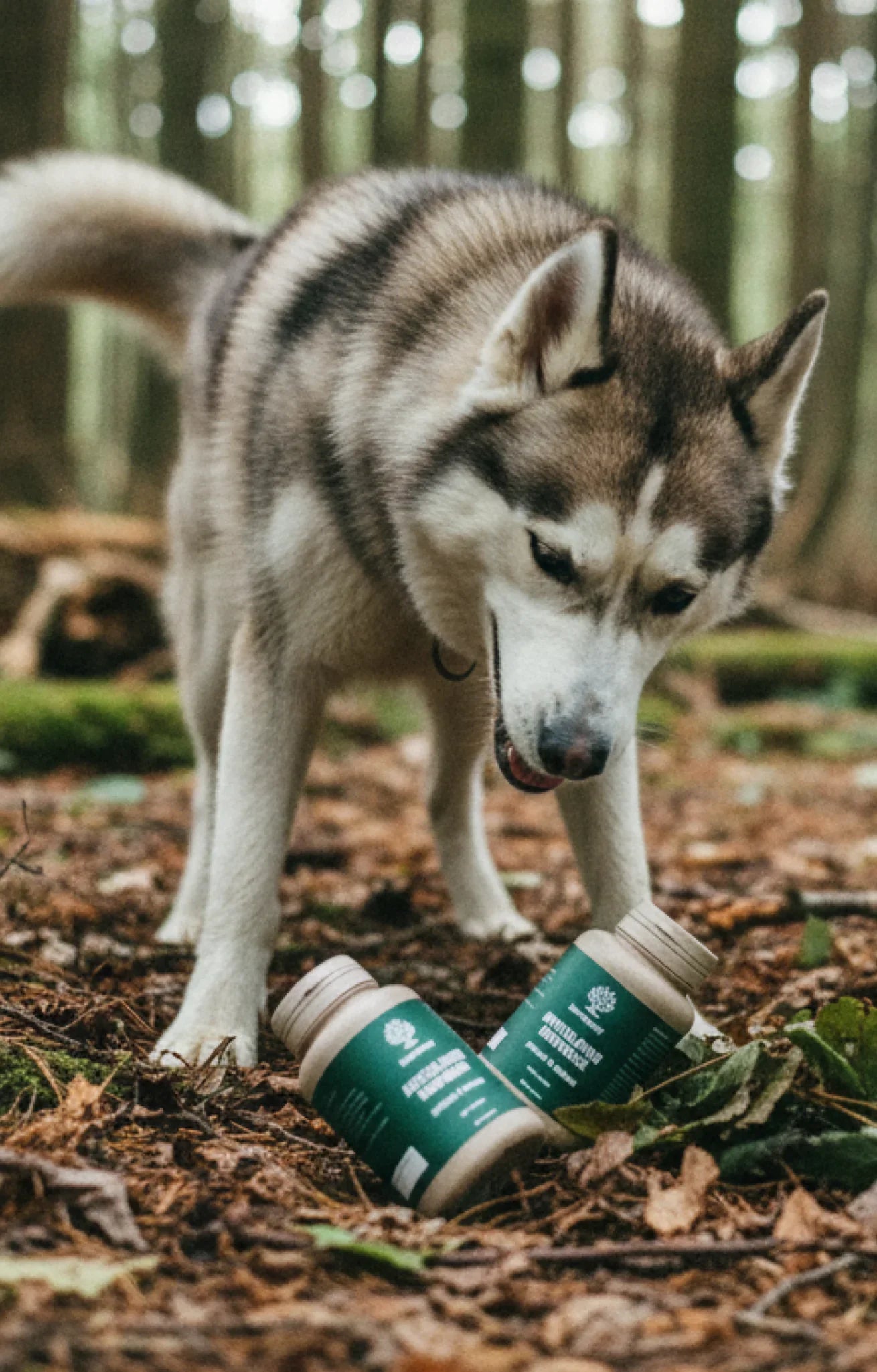
These signs are often played down until the day the general state really deteriorates. That is precisely where prevention takes on its full meaning. Modern approaches to animal well-being now consider it far more worthwhile to support the body before significant trouble appears, rather than acting only once the situation is established. This philosophy is at the heart of plant-based care for animals. At ELEMENT VET, this vision guides the development of the natural care products and supplements formulated to support animals day to day, whether for the joints, digestion, emotions or muscles.
Prevention rather than repair: a simple logic, still too rare
We have long tended to see supplements or natural care as “solutions” meant to correct a specific problem. Yet their main value often lies in regular, preventive use.
Take the example of the joints. Many owners only start supporting their dog once he becomes stiff, hesitates to jump or shows clear signs of discomfort. But certain breeds, certain sporting profiles, or simply natural ageing place demands on the joints for years before symptoms become visible.
In this preventive logic, solutions such as the natural joint supplements from ELEMENT VET can support active, sporting or senior dogs well before significant discomfort appears. The aim is not to “repair” a damaged joint miraculously, but to support mobility, limit certain compensations and support locomotor comfort over time.
The same approach holds for muscular recovery. Many dogs today take part in demanding physical activity: hiking, canicross, agility, pulling sports or repeated long walks. As with human athletes, these efforts generate muscular tension and micro-strains that are sometimes invisible. The Arnica Massage Gel ( Arnica and Essential Oils Dog Massage Gel - ELEMENT VET ) belongs precisely to this logic of recovery and muscular well-being. Used after exercise as part of a gentle massage, it helps release tension, support recovery and create a genuine moment of shared relaxation between dog and human. Arnica, wintergreen, calendula and aloe vera are traditionally used for their soothing and relaxing properties on tissue under strain. But here too, massage and recovery care take on their full meaning when they become a regular habit, rather than only a response to discomfort already in place.
The gut microbiota, a major new question in animal
well-being
One of the greatest developments in modern veterinary medicine concerns the
understanding of the gut microbiota. Research now shows that the gut influences far more than digestion. Immunity, energy, inflammation, behaviour and stress management depend in large part on gut balance.
In dogs as in humans, the microbiota acts as a genuine living ecosystem. When it is balanced, it takes part in the good general working of the body. But when it is disturbed by unsuitable food, stress, certain medicines or chronic imbalances, the consequences can appear quickly.
Digestive upset, soft stools, tiredness, a drop in vitality or emotional sensitivity can sometimes be linked to digestion that has been fragile for a long time. Here again, the preventive logic is essential. Waiting for digestive trouble to become chronic before supporting gut balance often limits what can be done.
The natural digestive solutions developed by ELEMENT VET belong precisely to this whole-picture approach to digestive comfort and microbiota support. The aim is not simply to mask a one-off symptom, but to help the body return to steadier and more lasting functioning.
Plant-based care for animals is not “alternative”, it is
complementary
One thing is worth repeating: veterinary plant-based care does not stand against
conventional medicine. Natural approaches must never replace a veterinary diagnosis when an animal is ill or shows significant symptoms.
That confusion is still very common today. Some imagine that using plants or natural supplements means refusing classic veterinary medicine. In reality, the most modern approaches to animal well-being work precisely in a complementary logic. More and more vets are in fact taking an interest in integrative approaches, combining conventional medicine, nutrition, suitable physical activity, recovery and plant-based care for animals.
This shift reflects an important realisation: health does not depend solely on a one-off treatment, but on a set of everyday factors. The quality of food, sleep, stress levels, physical activity, recovery, the emotional environment and supportive care all deeply influence animals' health over the long term.
Returning to a more coherent view of animal well-being
In the end, the real question around modern animal health is perhaps just that: to stop looking for instant solutions and relearn how to think about well-being over time. Plant-based care made in France, natural supplements for dogs and cats, recovery care and preventive approaches promise no miracle. They simply remind us that a body supported regularly often has more resources to stay balanced for as long as possible.
At ELEMENT VET, this view of animal well-being rests precisely on that idea of
overall coherence. Supporting the joints before the first discomfort, supporting
recovery after exercise, caring for the gut microbiota, encouraging muscular comfort or preserving the quality of life of senior dogs does not mean trying to “treat” an animal artificially. It simply means taking care of him before his body shows its limits.

Because at bottom, the real question is perhaps not: “What can we do when my animal is unwell?” but rather: “What can we put in place every day to help him stay well for as long as possible?” That is probably where prevention finally recovers its full meaning.


