

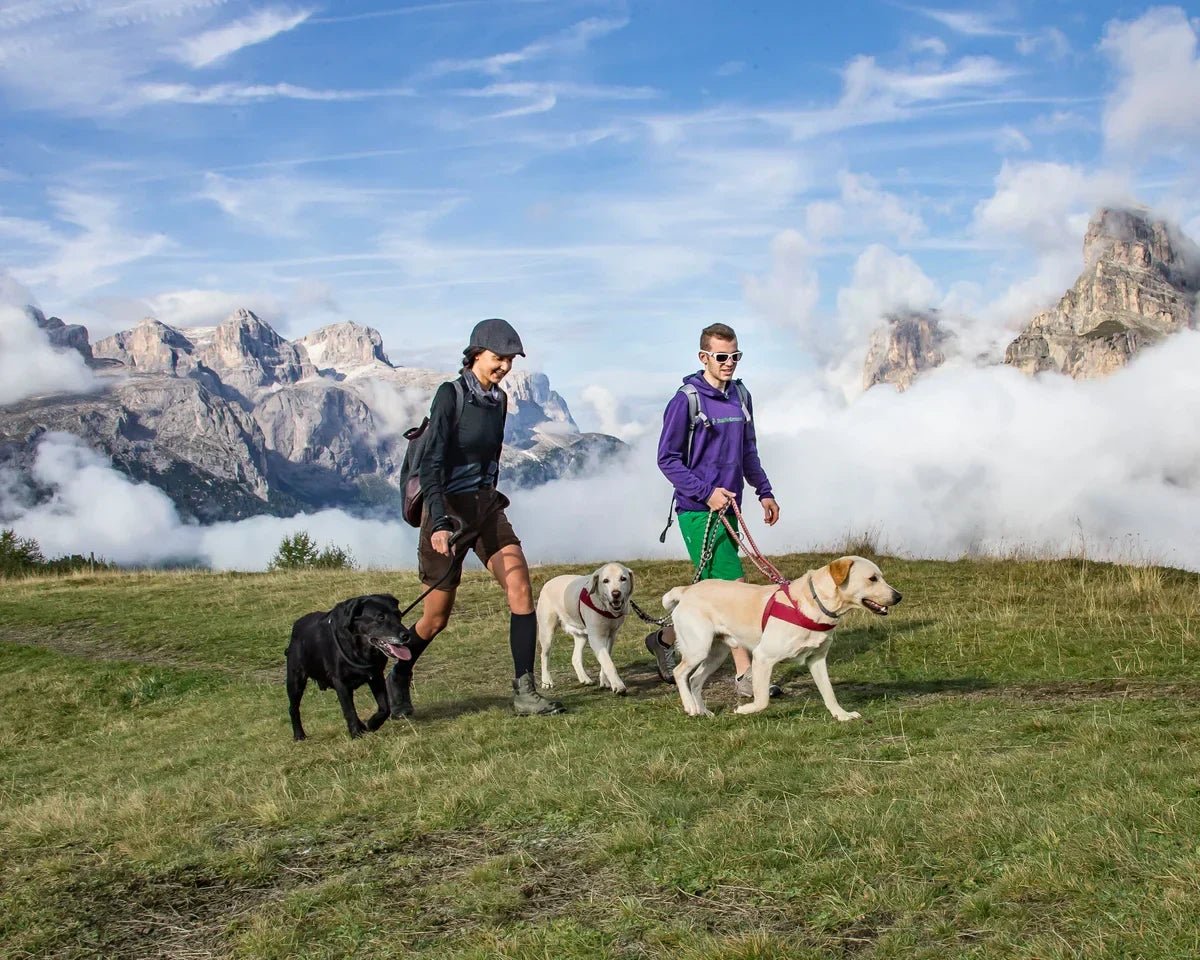
Holidays often mean freedom regained, days that stretch out, discoveries and precious family moments. After several months of work, the idea of a change of air is welcomed with enthusiasm. Yet while we generally experience this period as a happy interlude, we should not forget that it is also a significant upheaval for our dogs.
Unlike us, they do not understand the idea of a holiday. They live in the present moment and rely on landmarks that give their days their shape: timetables, walks, their environment, familiar smells and the presence of their family. When all of that changes overnight, even for an excellent reason, they can feel a certain unease. Whether they travel with you or stay behind in care, holidays almost always mean change. By preparing for this period a few weeks in advance, it is perfectly possible to help them through the transition more calmly.
Travelling with your dog: a fine adventure... that also calls for adjustment. Why can holidays stress a dog?
Taking your dog on holiday is a wonderful experience. Discovering new landscapes together, sharing forest walks, mountain hikes or strolls by the sea creates unforgettable memories. For many dogs these moments are genuinely enriching. However, this new daily life also requires a period of adjustment. Car journeys can be long, places unknown, smells new, noises different and encounters far more numerous than usual. Some dogs adapt very quickly.
Others need a little more time to find their bearings. A sensitive dog may be more restless, find it harder to relax or seem more watchful than usual. This behaviour is perfectly normal. It simply reflects the fact that his usual environment has temporarily disappeared.

When the dog does not go on holiday, leaving your dog during the holidays: how do you limit separation stress?
Sadly, not everyone can take their companion with them. Fortunately there are now many boarding solutions suited to each family's needs. Your dog can stay with people close to you whom he already knows, be welcomed by a host family, or stay in a specialist kennel.
Even when he is entrusted to caring people, or stays in his own environment thanks to someone close who comes to look after him, he still senses his family's absence. Here again, it is not necessarily intense stress, but rather a change in his habits. Timetables change, interactions are no longer the same, and the people caring for him naturally have their own way of communicating with him.
Most dogs adapt very well to these situations when they are prepared gently. Anticipation remains the best ally in helping them through this period as calmly as possible.
Why do dogs love their habits so much?
The dog is often described as a creature of routine, and that is no accident. Habits are genuine landmarks of safety for him. They let him anticipate the day's events and contribute to his emotional balance. When these landmarks temporarily disappear, some dogs can show signs of discomfort. They may seem more nervous, have trouble sleeping, ask for more attention, or, on the contrary, appear more withdrawn.
Every dog reacts according to his temperament, his age, his history and his sensitivity. A young dog discovering his first holiday will not necessarily react like an older dog who particularly values his familiar surroundings. The aim is obviously not to avoid change, but to support it as well as possible.
A few signs of discomfort:
- unusual panting
- restlessness
- difficulty sleeping
- loss of appetite
- constantly seeking his owner
- whining
- compulsive licking
- hypervigilance
Anticipating rather than enduring — going on holiday with your dog: how do you prepare him well?
Preparing for a holiday is not only about booking accommodation or packing bags. It is also the ideal moment to think about your dog's well-being. A few weeks before leaving, it can be worth starting to accustom him gradually to the situations he will meet.
If a long journey is planned, a fewcar trips can help restore his confidence. If boarding is arranged, one or two prior meetings with the person who will look after him are often very beneficial. This preparation period is also ideal for supporting his emotional balance naturally.

The ELEMENT VET Anti-Stress course: how can plant-based care help a dog through the holidays?
At ELEMENT VET, we developed the Anti-Stress course to help dogs through periods that can bring more emotion or more change into their daily lives. Its formula combines ingredients of natural origin carefully selected for their soothing properties. The plants are known for their natural relaxing effects and contribute to maintaining a better emotional balance.
The Anti-Stress course contains in particular griffonia, a plant that supports the production of serotonin, often called the well-being hormone. This support helps reduce nervousness and restlessness while encouraging calmer, more confident behaviour.
Contrary to received ideas, a settled dog is not a dog who loses his personality. He stays exactly the same, with his character and his joy in life. He simply approaches new situations more calmly. The formula also helps improve concentration. It can therefore be useful during periods of learning, and also when a dog has to adjust to a new environment or new landmarks.
Made in France, the ELEMENT VET Anti-Stress course is developed from natural ingredients, suits every breed and does not cause dependence.
The right moment to start the course
As the name suggests, preparation is always more effective when it is done ahead of time. Starting the Anti-Stress course before departure allows the dog's body to benefit gradually from its natural actives. The ideal is therefore not to wait until the eve of the holiday. A few weeks of preparation allow you to approach this new stage in the best conditions, whether your companion travels with you or is entrusted to someone you trust.

A successful holiday for the whole family
We often prepare our holidays meticulously: route, luggage, bookings, activities... Yet our dog's emotional well-being also deserves our full attention. A few simple steps, good anticipation and natural support can make all the difference.
10 tips for a successful holiday with your dog:
- Prepare for the journey several weeks ahead.
- Respect his pace.
- Take his toys.
- Keep the same food.
- Remember his hydration.
- Take regular breaks.
- Take his first-aid kit.
- Check the paw pads.
- Keep his health record with you.
- Start an Anti-Stress course before leaving.
A relaxed dog gets more out of new discoveries when he travels with you, and copes far more calmly with your absence when he stays in care. Holidays are made for creating wonderful memories… with every member of the family, your dog included.
By anticipating the changes, respecting his pace and supporting him naturally, you allow him to approach this new adventure with confidence.
At ELEMENT VET, we believe that good prevention is the finest gift you can give your companion.
Because our mission is simple: to make your animal's life better.

FAQ – HOLIDAYS WITH YOUR DOG
Can my dog be stressed during the holidays?
Yes. Changes of environment, rhythm and landmarks can unsettle some dogs.
When should you start an anti-stress course before the holidays?
The ideal is to begin two to three weeks before leaving, to give the natural actives time to work gradually.
Can my dog fly or make a long car journey?
Yes, provided the journey is well prepared, with regular breaks, good hydration and a reassuring environment.
Is it better to take your dog with you or arrange boarding?
It depends on his temperament, his health and the conditions of the stay. Some dogs enjoy the adventure, while others will be calmer in familiar surroundings with someone they trust.
Are anti-stress supplements suitable for every dog?
Natural formulas can support many dogs through periods of change, such as a holiday, a house move or a stay in kennels. It is always advisable to follow the directions for use and to ask your vet's opinion if the dog is on medication or has a health condition.


