

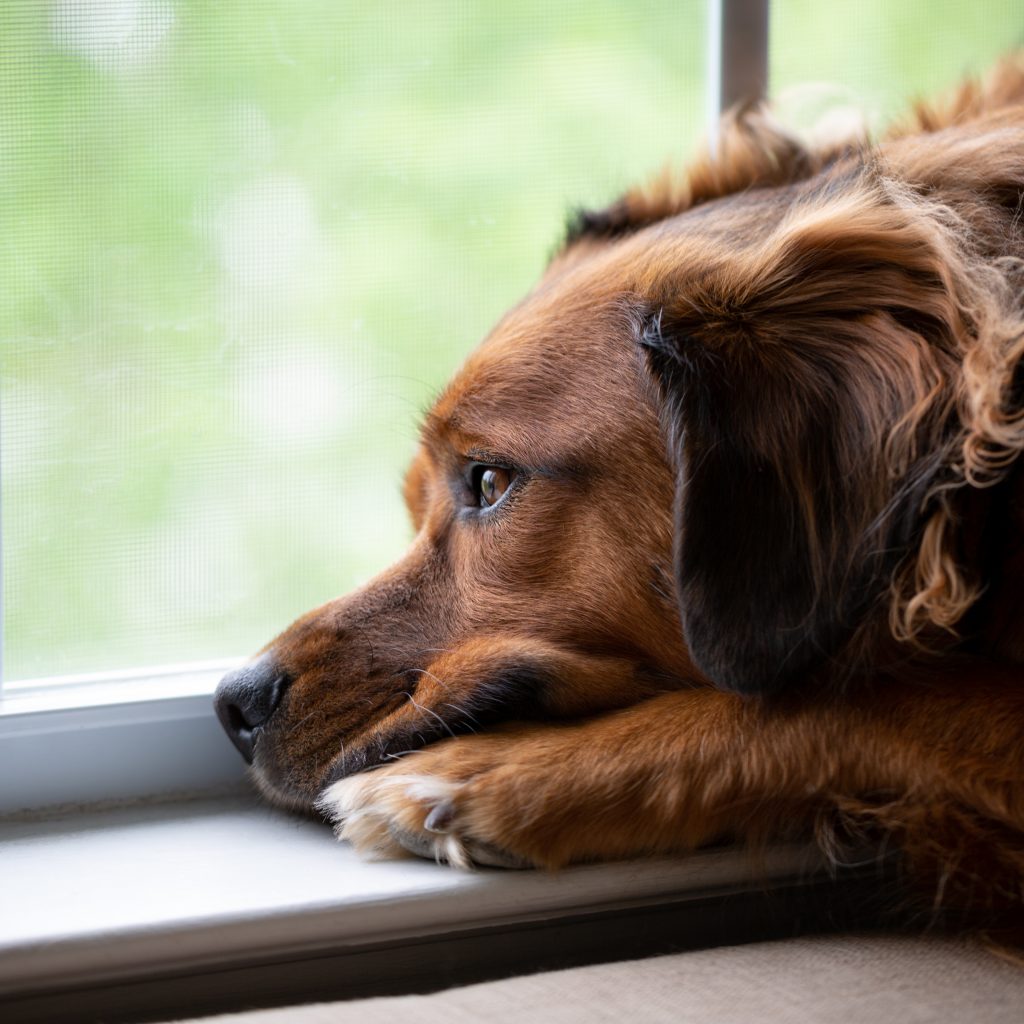
During the summer, everything changes. The days are longer, timetables looser, and walks sometimes stretch until sunset. We go away on holiday, we discover new places, we spend more time outdoors and, above all, we are often far more present with our dog.
For him too, this period means novelty, exploration and shared moments with his human.
Then September arrives. The suitcases are put away, the alarm goes off early again and everyone gradually returns to their usual rhythm. For the dog, this transition can matter more than it appears.
After several weeks spent almost constantly with you, going back to days when the house stays empty for hours is a real change. It is not necessarily “the blues” or sadness in the human sense of the word, but rather a shift in his landmarks and his habits.
Some dogs adapt very quickly. Others may need a few days, or even a few weeks, to find their balance again.

Why can the return to routine unsettle a dog?
During the holidays the dog often benefits from extra availability: more walks, more outings, more discoveries and above all more time spent with his family. Going back to the house and to work is therefore another change.
Outings may become shorter, timetables stricter and periods alone longer. Some dogs may then show more restlessness, ask for more attention or find it harder to stay alone.
The aim is obviously not to keep the holiday rhythm all year, but to help your dog gradually find an arrangement that fits your daily life.
What signs may show that your dog is finding the return hard?
A change of behaviour on returning from holiday is worth watching.
Your dog may in particular:
- find it harder to stay alone;
- follow you around the house more;
- ask for more attention;
- seem restless or find it hard to settle;
- vocalise when left alone;
- destroy certain objects;
- lose interest in his food or change his habits.
Not all of these signs mean a dog is suffering from anxiety. They must be read in the light of their intensity, their duration and the animal's usual behaviour.
If the change is significant or persistent, it is best to ask your vet or a qualified behaviour professional for advice.
1. Anticipating the return to routine
One of the best ways to help your dog through this transition is to avoid waiting for the first day back at work to change all his habits.
A few days before going back, start gradually reintroducing the autumn timetable.
If the holidays were shaped by late starts and two-hour walks, moving abruptly to an 8 o'clock departure and several hours of absence can be a significant change.
You can gradually:
- bring the waking hour forward;
- return to regular meal times;
- reintroduce calm moments at home;
- gradually resume short periods of absence.
The idea is not to end the holiday abruptly, but to recreate familiar landmarks even before going back.

2. Recreating a predictable routine
For a dog, routine is anything but boring. On the contrary, it can be a genuine landmark. Knowing roughly when he eats, when he goes out, when he rests and when he sees his human again makes his daily life more predictable.
So at the start of the autumn, try to keep a few regular fixtures: a walk in the morning before leaving, a calm moment on returning from work, a longer outing in the evening or a food-searching activity.
The quality of these moments often counts for more than their length.
3. Getting your dog used to being alone again, step by step
This is probably one of the most important changes after the holidays.
If your dog will once again have to stay alone for several hours, avoid going straight from several weeks of constant presence to a full day of absence. A few days before going back, start again with short absences and then gradually increase their length.
For a dog who already finds being alone very difficult, this progression must be particularly careful. Professional support may then be necessary.
4. Adapting walks without sacrificing their quality
Back in the routine, our timetable does not always allow the long summer walks.
But a shorter walk does not necessarily mean a poorer walk.
An outing of twenty or thirty minutes during which your dog can sniff, explore his environment quietly and take his time can be very enriching. At home, you can complete these outings with simple activities: treat searching, suitable occupation toys, scent exercises or short training sessions.
5. Not forgetting rest
Travel, encounters, new smells and different environments make holidays particularly stimulating. Even when the dog seems perfectly happy, all this novelty calls on his attention.
The return to routine can therefore also be an opportunity to recreate genuinely quiet times: a space where he can sleep without being disturbed, moments without play and a reasonably stable daily organisation.
Finding a routine again is not a punishment. It is also finding landmarks again.
6. How do you support a stressed dog at this time of year?
A regular routine, suitable physical activity, mental stimulation and rest are the first levers to put in place.
When the stress is occasional, a supplement can also support the dog through this transition.
Anti-Stress from ELEMENT VET, formulated from ingredients of natural origin, was designed to support the dog in situations that generate stress and when his landmarks are temporarily disrupted.
👉 Discover ELEMENT VET Anti-Stress
[Product page link to be added]
A supplement does not, however, replace proper care when stress is significant or persistent.
Unusual destruction, loud vocalising, loss of appetite or major difficulty staying alone should in particular lead you to seek advice from a vet or a qualified behaviour professional.
Going back to routine is not the end of the adventures
Returning to work does not mean the end of special moments with your dog. They will simply take another form.
The morning walk, the evening reunion, a long weekend outing or a particular activity can become new rituals.
Your dog does not need every day to resemble those of August. Above all, he needs to find stable landmarks again, gradually, and quality moments with you. And in the end, what he may remember most is not the long summer days now ending, but all the moments you will go on sharing with him throughout the year.
FAQ: dogs and the return to routine
Can a dog be stressed after the holidays?
A significant change of rhythm, particularly after several weeks spent with his humans, can require a period of adjustment for some dogs.
How do you get your dog used to staying alone again after the holidays?
Where possible, reintroduce short absences a few days before going back, and increase their length gradually.
How long does a dog need to find his routine again?
It depends on the individual animal. Some adapt quickly, while others may need several days or weeks.
How do you occupy your dog when he stays alone?
Suitable occupation toys or certain food-searching activities can help enrich his environment.
When should you seek advice?
When the signs are significant or persistent — unusual destruction, loud vocalising, loss of appetite or major difficulty staying alone — it is best to ask a vet or a qualified professional for advice.


